There’s a moment every procurement manager and plant engineer dreads. A critical component goes obsolete. The original supplier has shut down. The drawings don’t exist anymore. And production can’t stop.
What happens next depends entirely on which solution you reach for — and whether you understand the difference between two approaches that are frequently confused, occasionally conflated, and almost never properly explained.
Reverse engineering and re-manufacturing are not interchangeable terms. They solve different problems, apply at different stages of a component’s lifecycle, and require very different levels of technical capability from your manufacturing partner. Getting this distinction wrong doesn’t just cost money — it costs time you likely don’t have.
Let’s set the record straight.
What Is Re-Manufacturing?
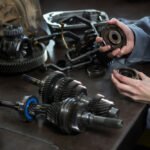
Re-manufacturing is the process of restoring a used or worn component back to its original performance specification. You start with an existing part — one that has been in service, has accumulated wear, or has failed — and you rebuild it.
The key word here is restore. Re-manufacturing assumes that the original design specifications are known, that manufacturing drawings exist, and that the goal is to return the component to a defined standard. The engineering has already been done. The task is production and restoration.
Re-manufacturing is common in sectors where components are expensive, where replacement lead times are long, and where the original specification is well-documented. Think gearboxes, hydraulic actuators, engine assemblies. Industries like heavy equipment, defence, and commercial vehicles rely on re-manufacturing programmes to extend component life without the cost of full replacement.
When Does Re-Manufacturing Make Sense?
Re-manufacturing is the right choice when:
- The original component design is documented and the specifications are available
- The component has a defined, repeatable failure pattern that can be addressed at rebuild
- Cost-per-unit economics favour restoration over new manufacture
- Lead times for new components make re-manufacturing a faster path to production continuity
If your original drawings are intact, your tolerances are defined, and your supplier simply no longer services the part — re-manufacturing is a relatively straightforward engagement.
The problem arises when none of those conditions are true.
What Is Reverse Engineering?
Reverse engineering starts from a fundamentally different position. You have a physical component — and nothing else.
No drawings. No original CAD files. No material certification. Possibly not even a reliable production history. What you have is the part itself, the knowledge that it once worked, and the requirement that it work again.
From that starting point, reverse engineering is the disciplined process of working backwards — from physical sample to manufacturing specification. Dimensional analysis, material identification, surface finish characterisation, tolerance reconstruction, and fit-and-function verification all have to happen before a single production operation begins.
This is not guesswork. Done properly, it is rigorous engineering — and it requires a team with both the technical instruments and the manufacturing experience to translate what they measure into something they can actually produce.
The Scenarios That Make Reverse Engineering Essential
Reverse engineering becomes necessary in situations that procurement teams sometimes don’t see coming until they’re already in them:
Legacy component failure. A machine that has been running for fifteen years suddenly needs a part that hasn’t been manufactured in a decade. The original supplier is gone. The OEM no longer supports it. The component lives only as a worn physical sample.
Discontinued parts in operational equipment. Automotive assembly lines, production machinery, and specialist vehicles regularly outlive the supply chains that supported them at launch. When a component goes end-of-life but the equipment doesn’t, reverse engineering is often the only viable path.
Imported equipment with no local support. International machinery frequently arrives without accessible supplier networks in the buyer’s market. When components fail, there’s no domestic supply chain to fall back on.
Supplier failure mid-programme. When a component supplier exits the market unexpectedly — through closure, acquisition, or capacity withdrawal — buyers who hold no original documentation are left exposed. Reverse engineering allows a capable manufacturer to step in and rebuild the specification from scratch.
Where Most Manufacturers Fall Short
Here’s the uncomfortable reality: most component manufacturers can re-manufacture to a spec. Far fewer can build the spec themselves.
Reverse engineering demands a specific combination of capabilities that not every facility can claim. You need precision measurement equipment capable of capturing complex geometries. You need material testing infrastructure to identify alloy compositions and heat treatment states. You need engineers who can interpret what they measure — who understand the functional intent of a design and can make intelligent decisions about tolerance reconstruction and material substitution when exact replication isn’t possible.
And then you need to be able to manufacture what you’ve specified. The reverse engineering capability only has value if it’s connected to genuine production infrastructure.
This is why the two questions worth asking any prospective manufacturing partner are not just can you machine this component? — but can you tell me what this component actually is and can you build it from nothing but the part itself?
How to Know Which One You Actually Need
The simplest diagnostic comes down to what you have in front of you.
If you have drawings, specifications, and material certifications — but your component is worn, failed, or needs to be reproduced — you likely need re-manufacturing or standard reproduction. The engineering work is done. You need production capability and process discipline.
If you have a component but no documentation — if the drawings are lost, the original supplier is gone, or the part predates your current supply chain — you need reverse engineering first. The specification has to be rebuilt before production can begin.
In some cases, you need both. A reverse-engineered component that then enters a re-manufacturing programme is not uncommon. The reverse engineering establishes the specification; the re-manufacturing process uses it repeatedly going forward.
Why This Distinction Matters for Your Supply Chain
The automotive and industrial supply chains that get into trouble are almost always the ones that didn’t plan for component lifecycle risk. Parts that have no documentation backup. Suppliers who hold all the institutional knowledge. Assemblies where a single obsolete component could halt an entire production line.
Reverse engineering capability in your supplier base is a form of supply chain insurance. It means that when the worst-case scenario arrives — and in long-running programmes, it often does — there is a path forward that doesn’t require shutting down production or accepting a costly redesign.
The bottom line: Re-manufacturing restores what you know. Reverse engineering recovers what you’ve lost. Both are legitimate, valuable tools — but only if your manufacturing partner has the genuine technical capability to execute either one properly.
When evaluating suppliers for complex or legacy component work, ask specifically about their reverse engineering process. Ask what equipment they use, how they validate reconstructed specifications, and whether they can show you examples of components they’ve reproduced without original documentation.
The answer will tell you immediately whether you’re talking to a manufacturer — or a manufacturing partner.